
How to start an RUO peptide company
Austin Siddiqi, founder of AUS Consulting, teaches it in seven steps: form a company in your home state, decide exactly who you sell to, run everything as research use only, set up payments built for a high-risk category, have every batch from your supplier tested by an independent US lab, sell through a store you control, and ship the first orders yourself.

Set up the company and the bank account
An LLC in your home state, a name without the word peptides, a free EIN and a business bank account.
Form an LLC before you buy anything. Run a research supply business through a personal checking account or a payment app and you personally are the business: every risk it takes lands on you. Suppliers, banks and payment processors will also ask for the company’s EIN before they work with you.
- File in your home state. You do not need an out-of-state entity to start, and staying home keeps the paperwork simple.
- Keep the word “peptides” out of the legal name and the DBA. Banks and processors flag it, and applications get declined.
- Get the EIN from the IRS once the formation documents come back. It is free, and the online application takes about ten minutes.
- Open a business bank account with the EIN and the formation documents.
Decide exactly who you are selling to
One specific research buyer, so every brand and store choice has a target.
The brand starts with an ideal customer profile: the one buyer you are building for, written down in detail, down to the kind of lab or institution they buy for. Two brands built for different buyers end up with different looks, different language and different reasons to buy.
Every later choice is checked against that profile: the name, the label, the packaging and the way the store reads. Without a brand, a vial is a commodity that buyers pick on price alone.
Go deeper: Austin’s branding breakdown (15 min, on YouTube).
Run everything as research use only
No human-use language anywhere, and the disclaimer on every page.
Research-use-only (RUO) products are sold for laboratory research, not for people. That has to be true of everything the brand publishes, from the product pages to the packaging, not only the fine print.
What an RUO brand never does
- Write about human use, personal outcomes or how to use a product.
- Describe its products with the brand names of approved drugs.
- Publish a product page without the research-use disclaimer.
Treat RUO as a posture you keep, not a loophole. The FDA has issued public warning letters to research peptide sellers whose websites pointed to human use, including a letter dated March 31, 2026.
Set up payments for a high-risk category
Expect high-risk underwriting, and keep a backup option ready.
Payment companies group research peptides with other high-risk categories. Mainstream e-commerce processors rarely approve these stores, and accounts that do get approved are often shut down within one to two weeks of real sales running through them.
- Expect high-risk underwriting. Most high-risk card processors want processing history before they approve a new brand.
- Many new brands start with payment methods that do not need card underwriting, then add a high-risk card processor once they have history.
- Be careful with offers that look too easy. Payment scams aimed at new brands in this category are common.
- Keep a second option ready in case a provider stops working with you.
Choose a supplier and test every batch
Start with a small test order and have every batch tested by an independent US lab.
There are two paths: an overseas manufacturer or a US one. Overseas supply costs meaningfully less per unit, which matters most when you are starting out. US-made product reads better to many buyers, but the raw material usually comes from overseas either way.
Testing settles it. Send samples from each batch to an independent US lab and publish the certificate of analysis (COA). A tested overseas batch can come back at a higher purity than an untested domestic one, and a report with your own brand on it tells buyers more than a supplier’s generic one.
Vetting a supplier
- Place a small first order and confirm it arrives before you scale up. Big discounts on a large first order are a common way new brands get scammed.
- Get third-party testing on your own product, with your label on the report, even when the supplier sends its own COAs.
- Be wary of suppliers found through social video or random forum threads.
- Print the lot number on every box so a buyer can match it to its certificate.
- Lot numberprinted on the box
- QR codeon the label, pointing at that lot
- Certificate of analysisfor that lot, from an independent US lab
Build a store you control
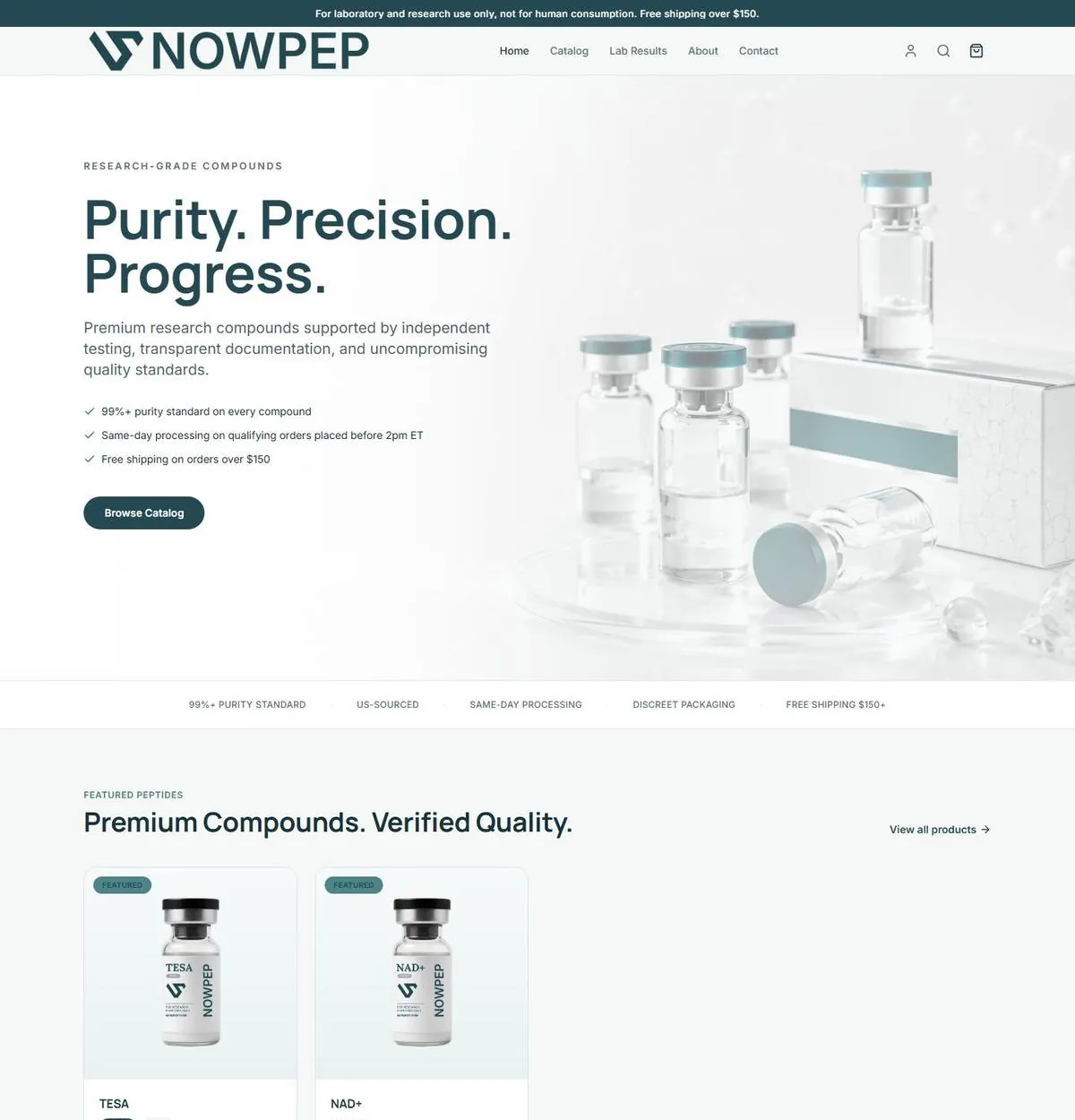
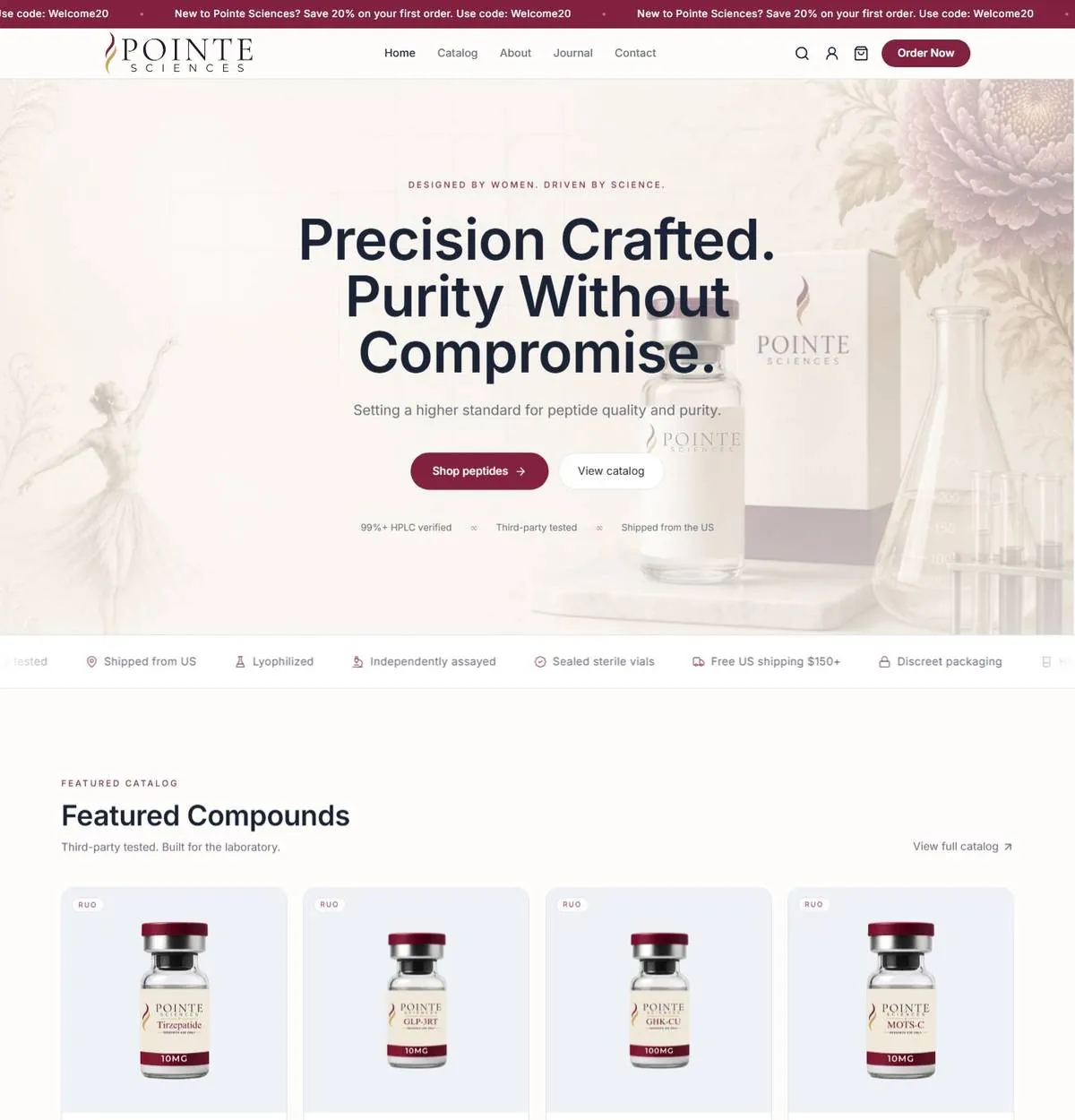
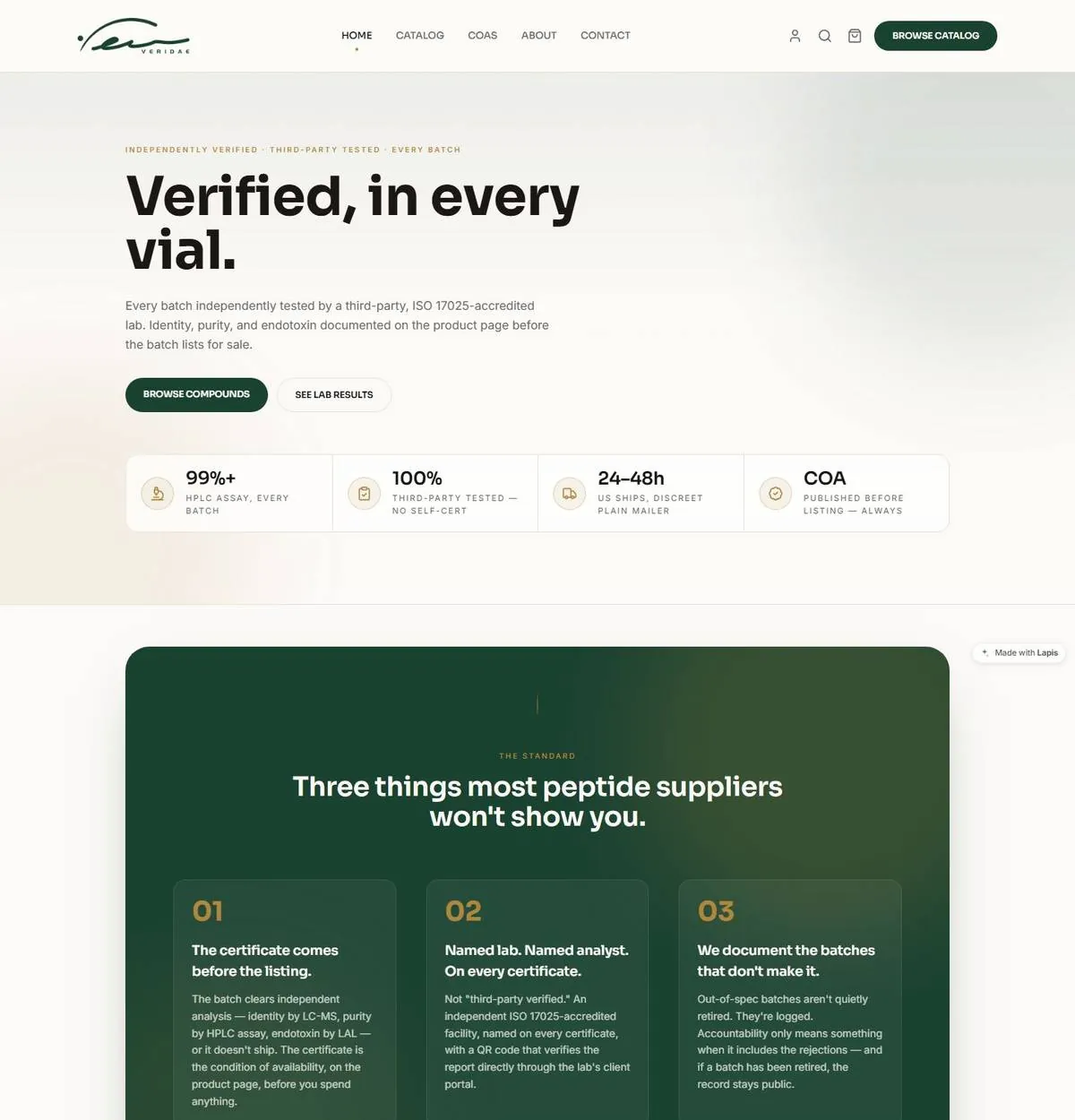
COAs on every product page, plain RUO language, a real contact and clear terms.
You do not need to be technical to build the store. The bigger risk is the platform: general e-commerce platforms can shut down stores in this category, so choose one where you keep control of the site. AUS Consulting builds client stores on Lapis, the commerce platform it built in-house.
What converts in this category is trust, and trust comes from five things:
- Certificates of analysis on every product page, with the testing lab’s name.
- Research-use-only language, stated plainly and early.
- A contact method someone actually answers.
- A short, simple path to purchase.
- Shipping and refund terms shown before checkout.
Ship the orders and follow up personally
Hold the inventory, ship it yourself at first, and thank every early buyer.
At the start you hold the inventory and ship orders yourself. Packing and shipping takes about an hour a day.
The part most brands skip is what happens after the order. Austin texts or calls early buyers to thank them personally and adds small extras that give people a reason to come back and to tell others. Word of mouth is how his own first brand grew.
None of this is passive at the start. It is a company, and it takes steady work to build.
Common questions
What is an RUO peptide company?
A business that sells peptides labeled and marketed for laboratory research use only. It does not sell products for human or veterinary use, and everything it publishes has to reflect that.
Do I need an LLC to start a research peptide brand?
Yes. Suppliers, banks and payment processors ask for an EIN, which comes from a registered company, and an LLC keeps the business’s risks separate from you personally. Austin recommends filing in your home state.
Should the company name include the word peptides?
No. Banks and payment processors flag it, and applications get declined. Keep it out of the legal name and the DBA.
How much does it cost to start a research peptide company?
Most of the cost is the first supplier order and third-party testing. Forming the company costs little and the EIN is free. Start with a small test order rather than a large discounted one.
How do research peptide brands take payments?
Through providers that accept high-risk categories, since mainstream processors rarely approve these stores. Many new brands start with methods that do not need card underwriting and add a high-risk card processor once they have history.
How do I know a supplier’s product matches the label?
Order a small amount first, then have each batch tested by an independent US lab and publish the certificate of analysis on the product page, with your brand on the report.
Do I need to be technical to build the store?
No. The bigger decision is choosing a platform you control that will not shut the store down.
How much time does it take day to day?
Packing and shipping takes about an hour a day at the start. Building the customer base takes steady work; it is not passive early on.
Who is Austin Siddiqi?
Austin Siddiqi is the founder of AUS Consulting, a Miami agency that builds and launches research-use-only peptide brands. He teaches the process on his YouTube channel, @austintss.
Can AUS Consulting build the brand with me?
Yes. AUS Consulting builds the brand, the store on Lapis, the payment setup and the operating systems with you. Start with Austin’s free training at byaus.co/vsl.
Keep going
 12:07
- 0:00Who Austin is
- 0:16Why the category is growing
- 3:18Why the model runs on repeat buyers
Want a team to build it with you?
AUS Consulting builds research-use-only peptide brands end to end: the brand, the store, payments and operations. Start with Austin’s free training.
Watch the free trainingThen apply to work with Austin’s team if it is a fit.
This guide is general business information, not legal or tax advice. Products sold by research-use-only brands are for laboratory research use only and are not for human or veterinary use. Nothing on this page is medical advice or a statement about any compound.